Parametric vs Nonparametric Tests:
How to Choose
Parametric vs nonparametric tests is not a choice between normal and non-normal data. A t-test answers a question about means, while a rank-based test answers a question about ranks or distributions. Choose the test that matches the estimand, the design and the outcome scale, then examine the assumptions that apply to it.
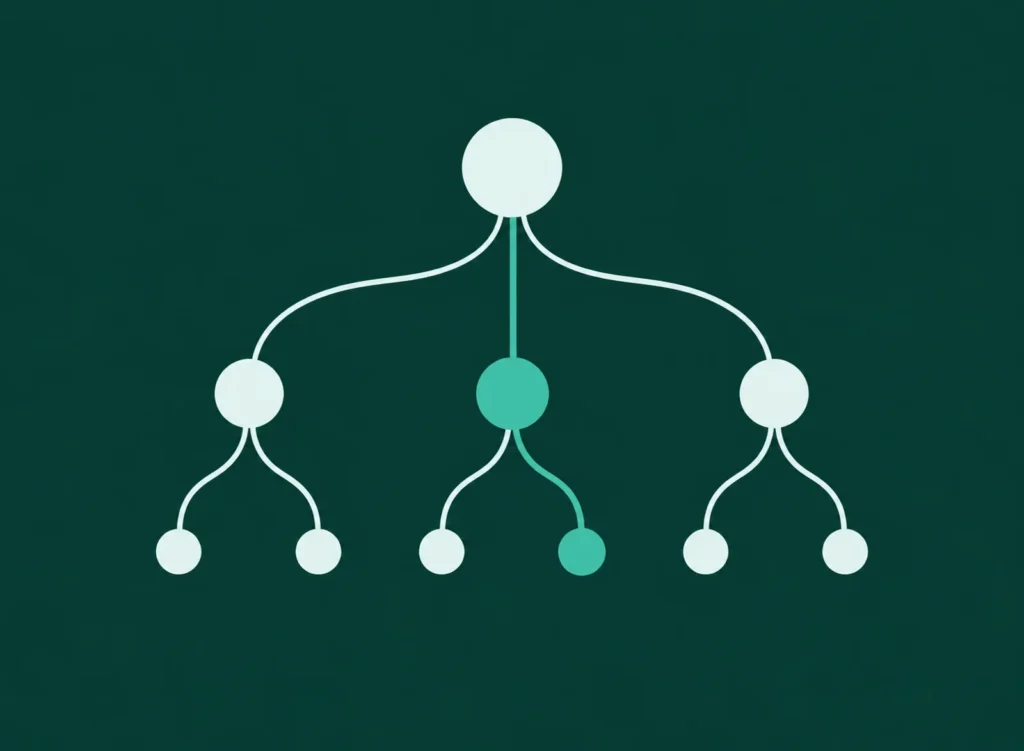
A parametric model specifies a structure or family of distributions, whereas many rank-based nonparametric tests make fewer distributional assumptions. Both types still require assumptions about the study design and what is being compared.
Parametric vs nonparametric tests: what does each estimate?
A two-sample t-test focuses on means. Its validity depends on independence and other conditions, with robustness that can be good even when raw outcomes are skewed in sufficiently informative designs. The Wilcoxon-Mann-Whitney test is based on rankings and can detect differences in distribution; it is not universally a test of equality of medians (Fagerland, 2012).
| Situation | Useful option | Caution |
|---|---|---|
| Independent continuous group means | Welch t-test | Check independence, outliers and precision |
| Paired continuous change | Paired t-test | Assumptions apply to paired differences, not each group separately |
| Ordinal or heavily skewed independent outcomes | Rank-based method | Define what distributional difference means |
| Small sample with pronounced outliers | Robust, exact or resampling method | Small samples make assumption checking difficult |
| Correlated outcomes over time | Mixed, marginal or repeated-data model | Ordinary independent-group tests ignore correlation |
Why “not normal = Mann-Whitney” is an error
The t-test and Mann-Whitney test do not automatically test the same scientific claim. If groups differ in spread but not location, a rank test can behave differently from a mean-comparison test. Fagerland (2012) illustrated how choice of procedure affects inference, particularly in large samples with distributional differences.
A normality test conducted in each group should therefore not act as the sole switch controlling analysis. Examine histograms and relevant diagnostics, consider the actual estimand and choose a method appropriate for it.
Parametric does not mean no robustness
The ordinary Student t-test assumes equal variances. Welch’s t-test allows unequal variances and is a reasonable default for many independent group-mean comparisons. However, neither version removes biases caused by nonrandom sampling, unmodeled clusters or measurement problems. With severe outliers or heavy tails, a robust mean estimator or bootstrap procedure may better reflect the objective.
Nonparametric does not mean assumption-free
Rank-based methods still depend on independence or correct pairing and on assumptions related to distribution and interpretation. Some tests have exact small-sample formulations; ties, repeated observations or clustering can change the null distribution and calculation. Interpret the test as one about ranks or stochastic ordering unless additional assumptions justify a simple median-difference statement.
An example of different questions
Imagine one group has values tightly concentrated near a center and another has the same mean but a much wider spread. A mean-difference test and a distribution-sensitive rank test may give different answers. That does not necessarily mean one is defective: they may target different properties of the data. The numbers here are conceptual, not measured research results.
What to report
State the question, the chosen test and why its assumptions fit the design. Provide an interpretable effect estimate (mean difference, a median-related quantity under appropriate assumptions, a rank-based effect or a distributional contrast) with uncertainty where feasible. Do not use a significant rank-test p-value to assert a specific mean difference that the test did not estimate.
Choosing responsibly
A better decision process is: choose the scientific estimand, understand dependence and sampling, inspect relevant distributions, then select the analysis. Do not use Shapiro-Wilk significance as a universal gatekeeper (Kirkwood & Sterne, 2003).
Frequently asked questions
Is Mann-Whitney always a test of medians?
No. Its general interpretation concerns ranks or relative distributions; median interpretation needs further assumptions.
Is a t-test impossible for skewed data?
No. Suitability depends on sampling, sample size, outliers, variance and the specific inferential goal.
What if group variances differ?
Welch’s t-test is often an appropriate mean-comparison method for independent groups with unequal variances.
Quantitative Data AnalysisUnsure whether a t-test or a rank-based test fits your question? A statistician checks the estimand, the design and the diagnostics, then specifies the analysis and the effect estimate to report.
Quantitative Data Analysis
Quantitative Data Analysis at OnlineSPSS, a specialist statistical consultancy for researchers, is carried out in-house by a PhD-level statistician. The scope, deliverables and fixed project fee are confirmed after review and before work begins. The substantive interpretation and conclusions of the study stay with the research team.
References
- Fagerland, M. W. (2012). t-tests, non-parametric tests, and large studies—A paradox of statistical practice? BMC Medical Research Methodology, 12, Article 78. https://doi.org/10.1186/1471-2288-12-78
- Kirkwood, B. R., & Sterne, J. A. C. (2003). Essential medical statistics (2nd ed.). Blackwell Science. https://www.wiley.com/en-us/essential-medical-statistics-2nd-edition-p-9780865428713
Last reviewed November 2026 by the OnlineSPSS Statistical Team. Worked examples use hypothetical values and are not client data.
NEXT STEP
Need this done for
your study?
Share your research in about a minute and receive a complimentary assessment the same day: scope, timeline and one fixed fee.
No Commitment Required
Strictly Confidential
Fixed Project Fee
In-House PhD-Level Statisticians
Same-Day Response
Serving Researchers Since 2014